











How IDCUBE Enabled a Contactless Access Experience at Amaad Business Park
Overview
Amaad Business Park represents a new generation of commercial ecosystems designed to support multiple enterprises, shared infrastructure, and a continuous flow of employees, visitors, and service providers across a unified campus.
In such an environment, access is no longer limited to security checkpoints. It directly influences how people move, how efficiently operations run, and how seamlessly users experience the space. Every interaction—from entering the campus to reaching a workspace becomes part of a larger, interconnected journey.
To support this vision, Amaad set out to build a fully unified, digital-first access ecosystem one that connects identities, infrastructure, and mobility into a single operational layer. At the same time, it was essential to retain Honeywell EBI as the core enforcement backbone, ensuring enterprise-grade reliability and compliance.
The goal was ambitious: to create a frictionless, contactless, and intelligent access experience, where movement across the campus is governed not by systems, but by identity.
The Challenge
In most large commercial campuses, access workflows evolve independently. Employee onboarding, visitor management and parking allocation are typically managed through separate systems, each optimised for its own function but disconnected from the broader user journey.
The organisation needed to transform workflows into a single, continuous journey, where access is seamless from entry to destination.
However, this transformation had to be achieved within a set of critical constraints. Honeywell EBI had to remain the authoritative control layer, meaning all access decisions ultimately needed to be enforced through it. At the same time, all systems had to communicate through real-time APIs, ensuring synchronisation without latency or inconsistencies.
Another key requirement was the move away from traditional credentials. Amaad aimed to adopt dynamic, digital credentials, including QR-based access for employees and time – bound QR credentials for visitors. The objective was to create a completely contactless environment across the campus.
The solution was about bridging legacy infrastructure with next-generation identity frameworks, without compromising security, performance, or user experience.
The Solution
IDCUBE approached it with a simple yet transformative principle: every movement across the campus should be driven by identity.
At the core of the solution is Access360, acting as the orchestration layer that connects systems, governs policies, and ensures real-time synchronisation across the ecosystem.
- A Unified Identity Layer for Employees
The foundation of the system lies in centralised identity management, powered by GreenID. Employee identities are created once and managed centrally, eliminating duplication and ensuring consistency across all systems.
When an employee is onboarded, their identity is established within GreenID and synchronised with Access360. Access policies are assigned centrally and propagated in real time to Honeywell EBI, ensuring that access rights are enforced consistently across all entry points.
Instead of traditional cards, employees are issued dynamic QR credentials. These credentials are designed to refresh continuously, enhancing security and eliminating risks associated with static identifiers. This approach ensures that while the backend remains stable and reliable, the identity layer evolves to support modern, flexible credentialing.
- Reimagining the Visitor Journey
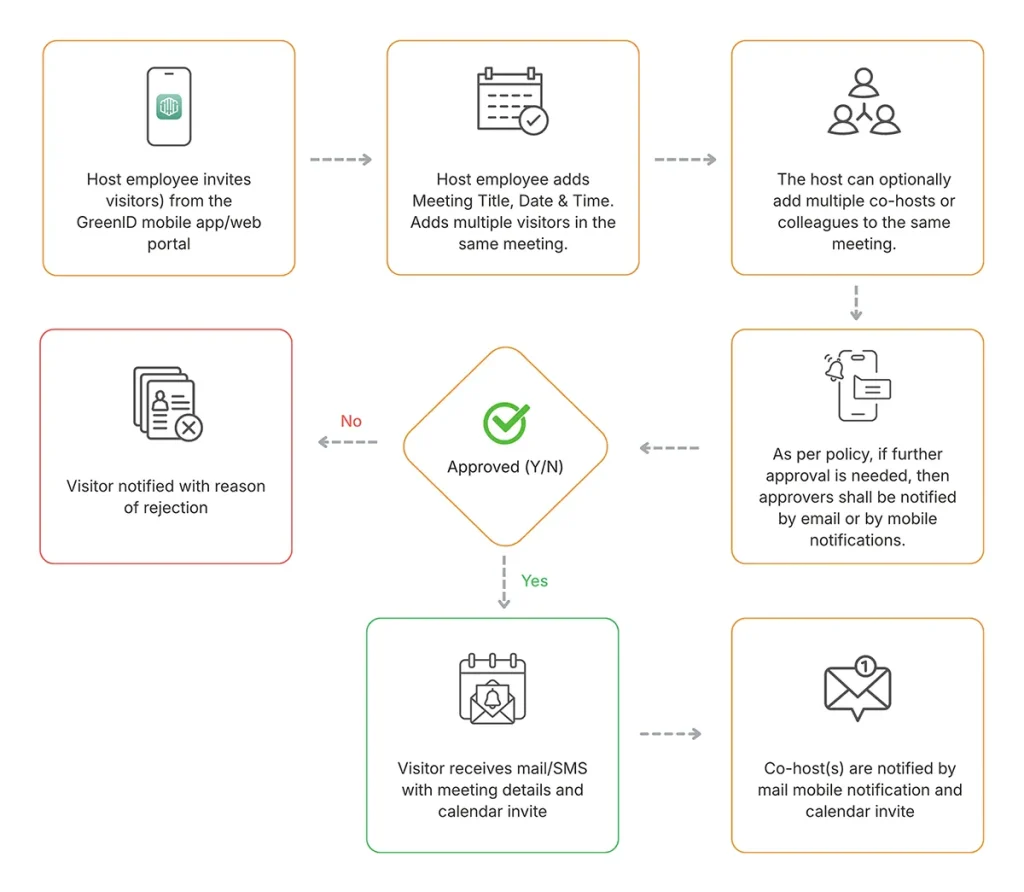
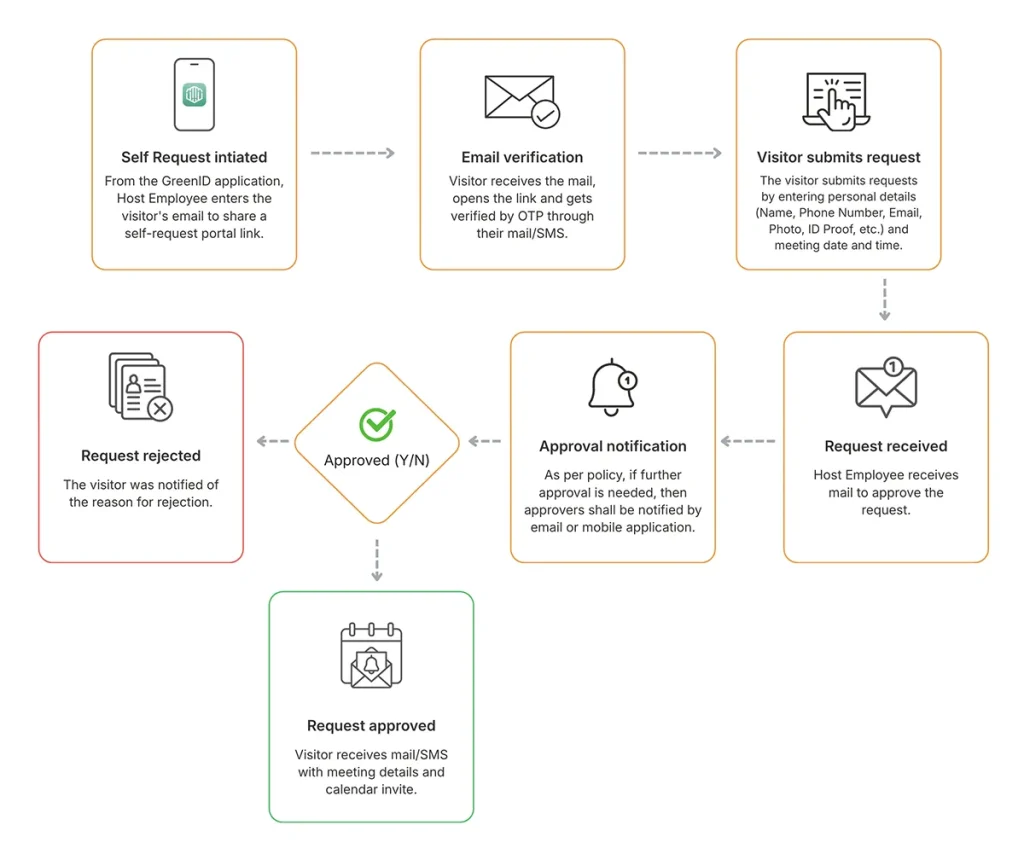
The most visible transformation at Amaad Business Park lies in the visitor experience. Traditionally, visitor access involves multiple steps—registration, approval, badge issuance, and manual coordination at entry points. IDCUBE reimagined this process as a fully digital, pre-orchestrated journey.
Visitors are invited in advance and receive time-bound QR credentials before arrival. These credentials serve as a single key for the entire visit, enabling access across multiple touchpoints within the campus.
Upon arrival, the same credentials allow visitors to:
- Enter the campus seamlessly
- Access car parking facilities (as integrations are completed)
- Be guided to the designated parking spaces
- Use elevators with predefined access rights
- Enter specific office or tenant spaces
This creates a single, uninterrupted journey, eliminating queues, reducing dependency on manual processes, and significantly enhancing user experience.
Rather than interacting with multiple systems, visitors interact with a single identity that
governs their entire movement.
- Bridging Infrastructure with Modern Credentials
To enable QR-based access within an environment built on Honeywell EBI, IDCUBE introduced a critical hardware layer using multi-credential IDCUBE readers.
These readers act as a bridge between modern digital credentials and existing access control infrastructure. They are capable of interpreting QR and mobile-based credentials while communicating seamlessly with Honeywell controllers.
This ensures that Amaad can adopt next-generation identity frameworks without replacing or disrupting its existing infrastructure. The result is a future-ready system that combines flexibility with reliability, enabling the coexistence of legacy systems and modern technologies.
- Extending Access into Mobility
One of the defining aspects of the solution is its ability to extend access control beyond physical entrypoints into the broader concept of mobility.
Through Access360, identity is not limited to doors—it governs movement across the entire campus. The platform integrates with parking management systems and parking guidance solutions, ensuring that access begins at the entry gate and continues through every stage of the journey.
As these integrations evolve, the system will enable a fully connected experience where users can move from entry to parking to office spaces without encountering any friction or manual checkpoints.
This transforms access control from a static function into a dynamic, experience-driven layer that aligns with the way modern commercial campuses operate.
The Impact
At Amaad Business Park, access has evolved into a connected, intelligent experience.
Visitors are now onboarded digitally and receive credentials before arrival, eliminating waiting times and manual verification processes. Employees operate within a unified identity framework, with access rights managed centrally and enforced consistently across the campus.
The shift to QR-based credentials has enabled a completely contactless environment, reducing physical dependencies while enhancing security. Dynamic and time-bound credentials ensure that access is always aligned with policy, minimising risks associated with misuse or duplication.
Operationally, the impact is equally significant. Manual processes have been eliminated, administrative overhead has been reduced, and real-time synchronisation ensures that all systems operate in harmony. Security is strengthened through continuous validation, while user experience is elevated through seamless, intuitive interactions.
Most importantly, the system aligns access control with the broader vision of a modern commercial ecosystem where technology not only secures spaces but also enhances how people interact with them.
Perhaps most importantly, the system aligns access control with the broader vision of a modern commercial ecosystem, where technology not only secures spaces but also enhances how people interact with them.
Conclusion
Amaad Business Park demonstrates how access control can evolve from a functional necessity into a strategic enabler of experience.
By combining GreenID as the identity layer, Access360 as the orchestration engine, and Honeywell EBI as the enforcement backbone, IDCUBE has delivered a system where every movement is intelligently governed.
The result is an ecosystem where security, mobility, and user experience converge, creating a future-ready model for commercial campuses.
In this environment, access is no longer a checkpoint it is a continuous, identity-driven journey, designed to be secure, seamless, and scalable.